
Hemorrhoids, commonly called piles, are a widespread medical concern that can affect anyone, regardless of age or gender. Understanding what piles look like, knowing the common signs and symptoms, and being aware of the most effective treatment options can help you find relief quickly and confidently. In this article, explore detailed piles images, difference between internal and external hemorrhoids, key causes, and breakthrough treatment options like laser surgery—all presented in an accessible visual guide.
What Are Piles and Why Do They Occur?
Piles are swollen, inflamed veins in the lower rectum or anus. Two main types exist:
- External hemorrhoids: Located under the skin around the anus, often causing visible lumps, pain, or discomfort.
- Internal hemorrhoids: Develop inside the rectum; these are usually not visible but can cause painless rectal bleeding or protrusion during bowel movements.
Common causes include chronic constipation, straining during bowel movements, prolonged sitting, pregnancy, obesity, low-fiber diet, and aging. Women, especially during pregnancy, may develop hemorrhoids due to hormonal changes and increased abdominal pressure.
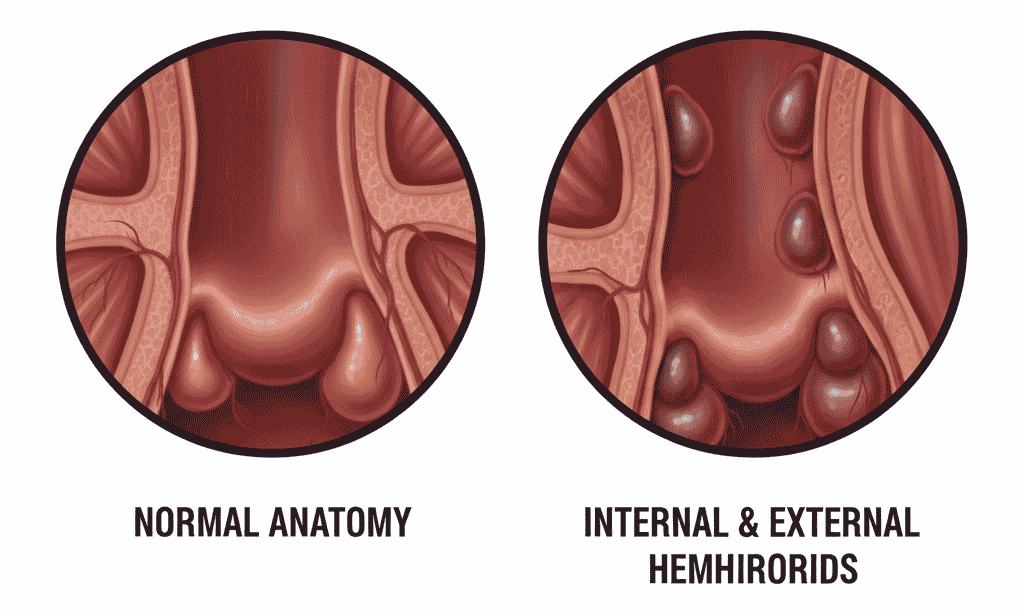
Piles Images: Visual Recognition of Hemorrhoids
Piles images are important for self-recognition and timely consultation. Here’s how you can visually identify common types:
| Type | Appearance | Common Symptoms |
|---|---|---|
| External Piles | Painful, bluish lumps near anus [piles images] | Pain, swelling, irritation, or bleeding |
| Internal Piles | Swelling inside rectum, not easily visible | Bleeding, prolapse during straining |
| Bleeding Piles | Bright red blood after bowel movement | Blood on toilet paper or in stool |
Images of all four hemorrhoid grades show increasing severity. Grade 1 appears as minor swelling, Grade 2 may prolapse then retract, Grade 3 requires manual reduction, while Grade 4 is permanently prolapsed and can be painful.
Piles in Women and Men: Unique Aspects
- Piles Images in Women: Often related to pregnancy or childbirth. Images may show external swelling or prolapse during late stages.
- Piles Images in Men: Similar in appearance; lifestyle factors like long driving, heavy lifting, or sedentary work often contribute.
Bleeding Piles: How They Look
Bleeding piles usually present as bright red blood during or after bowel movements. Images may show ruptured vessels in internal hemorrhoids, with visible external swelling if clots form.
If you notice any unusual bleeding, consult a specialist promptly. Not all rectal bleeding is due to piles and could represent more serious conditions.
Key Symptoms—With Visual Clues
- Painful lumps around anus
- Swelling, itching, or burning
- Mucus discharge
- Blood on tissue after passing stool
- Prolapse (visible bulging from anus)
External vs Internal Piles: A Quick Comparison
| Feature | External Piles | Internal Piles |
|---|---|---|
| Visibility | Visible lumps outside anus [external piles images] | Not visible without medical tools |
| Pain | More painful, especially when sitting | Less painful, but may cause bleeding |
| Bleeding | Uncommon unless ruptured | Common after stool passage |
Read similar post : Hernias Pictures: Types, Symptoms, and Treatment Options
Latest Piles Treatment Options
Conservative Treatments:
- High-fiber diet, fluids, and regular exercise
- Sitz baths (soaking in warm water)
- Avoid straining during bowel movements
Office Procedures:
- Rubber band ligation (for Grades I–II): Effective, safe, minimal downtime
- Infrared coagulation or sclerotherapy: For suitable cases
Surgical Options:
- Laser piles treatment: Minimally invasive, stitch-free, rapid recovery, low recurrence
- Stapled hemorrhoidopexy or open hemorrhoidectomy: For advanced cases
Consult a proctologist to determine the best treatment for your specific condition.
Why Choose Advanced Laser Piles Surgery?
- Fast recovery (as little as 2–3 days)
- Minimal pain and bleeding
- Lower recurrence rates
- Suitable for most Grades II–IV hemorrhoids
Frequently Asked Questions
Q: Are piles visible externally?
A: Only external piles and advanced prolapsed internal piles can be seen outside the anus.
Q: Are piles dangerous?
A: While not usually life-threatening, untreated piles may lead to complications like thrombosis, anemia, or infection.
Q: Is laser piles treatment painful?
A: No. Modern laser surgery is minimally painful compared to traditional surgery.
Q: When should I see a doctor?
A: If you notice blood in your stool, persistent discomfort, or prolapse, consult a proctologist for personalized advice.
Comments